Clinical Repercussions of Self-Medication With Corticosteroids for Aesthetic and Sports Purposes
DOI:
https://doi.org/10.5281/zenodo.20173326Keywords:
Corticosteroids, Self-Medication, Sports Medicine, Cushing Syndrome, Metabolic ComplicationsAbstract
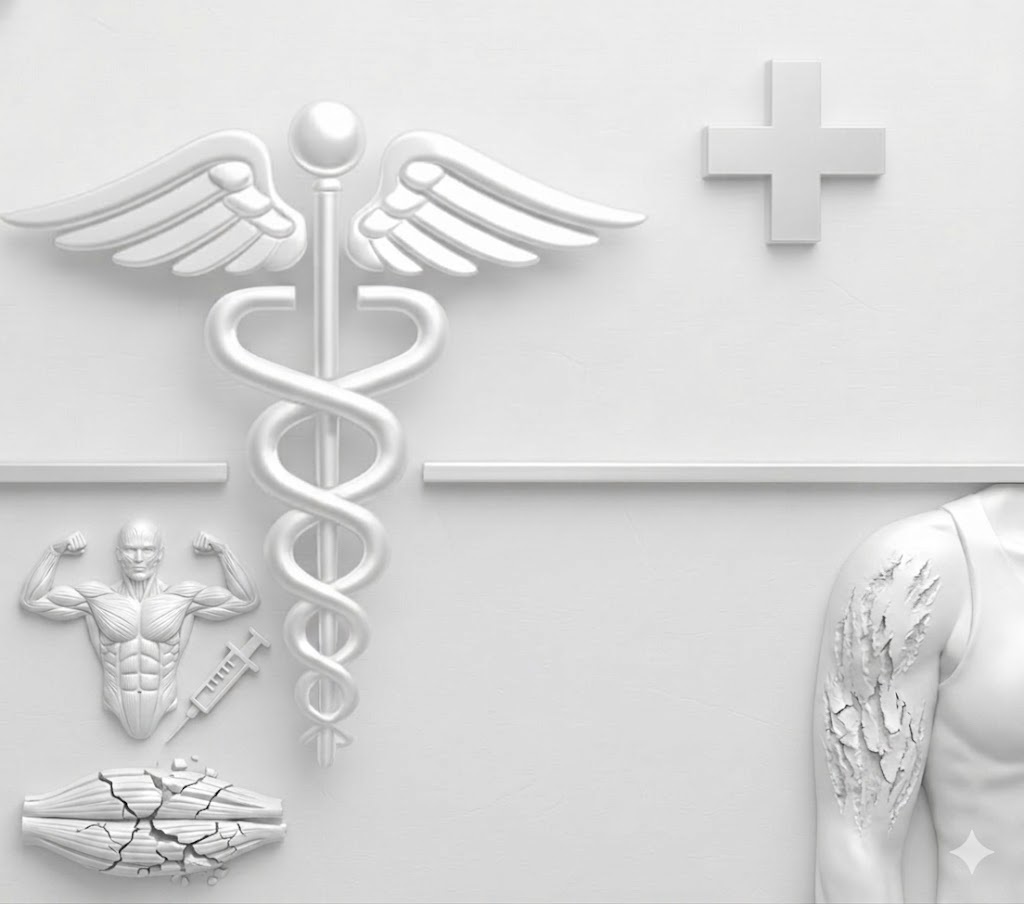
Introduction: Self-medication with corticosteroids for aesthetic and sports purposes has increased significantly in recent years, especially among young adults and physically active individuals. The search for muscle hypertrophy, rapid weight loss, and body enhancement has encouraged the indiscriminate use of these substances, often without proper medical supervision. Despite temporary perceived benefits, glucocorticoids may trigger important systemic clinical repercussions. Objective: To analyze the main clinical repercussions associated with self-medication with corticosteroids in aesthetic and sports contexts. Methodology: This is a qualitative and descriptive narrative literature review conducted in the PubMed, Scielo, Google Scholar, and ScienceDirect databases between March and May 2026. Studies published between 2016 and 2026 addressing indiscriminate corticosteroid use and its systemic complications were included. At the end of the selection process, 8 studies composed the final analysis. Results: The main complications identified included insulin resistance, secondary diabetes mellitus, arterial hypertension, iatrogenic Cushing syndrome, immunosuppression, osteoporosis, psychiatric disorders, and suppression of the hypothalamic-pituitary-adrenal axis. Increased cardiovascular risk, dermatological alterations, and worsening of musculoskeletal injuries due to masking of pain and inflammation were also reported. The concomitant use of other ergogenic substances intensified systemic adverse effects. Conclusions: Self-medication with corticosteroids represents an important public health issue due to the progressive and often silent clinical repercussions associated with indiscriminate use. Educational strategies, prevention, and increased awareness are essential to reduce risks related to this practice.
References
1. Zheng Y, Tang PK, Hu H, Ung COL. Patterns of self-medication and intention to seek pharmacist guidance among older adults during the COVID-19 pandemic in Macao: a cross-sectional study. BMC Public Health. 2024;24(1):2066. doi:10.1186/s12889-024-19453-2.
2. Riiser A, Stensrud T, Andersen LB. Glucocorticoids and physical performance: a systematic review with meta-analysis of randomized controlled trials. Front Sports Act Living. 2023;5:1108062. doi:10.3389/fspor.2023.1108062.
3. Ataallah B, Al Tameemi M. Iatrogenic Cushing's syndrome and the hidden ingredient of Artri King. Cureus. 2026;18(1):e100843. doi:10.7759/cureus.100843.
4. Rifaei SM, Etoom S, Hanandeh SA, Ali SH, Alzboon AM, Al-Jaraideh MD, et al. Public awareness of corticosteroid use and side effects: a cross-sectional study from Jordan. Mater Sociomed. 2025;37(1):24-31. doi:10.5455/msm.2025.37.24-31.
5. Risks related to the use of anabolic steroids for aesthetic purposes. Res Soc Dev. 2022;11(7):e18811729983. doi:10.33448/rsd-v11i7.29983.
6. Cotobal-Calvo EM, Mata-Pérez C, Bocchino A, Gilart E, Gutiérrez-Baena B, Palazón-Fernández JL. Self-medication practice and associated factors among health professionals in Spain. Nurs Rep. 2025;15(2):53. doi:10.3390/nursrep15020053.
7. Tavares LCP, Caetano LVN, Ianhez M. Side effects of chronic systemic glucocorticoid therapy: what dermatologists should know. An Bras Dermatol. 2024;99(2):259-268. doi:10.1016/j.abd.2023.05.005.
8. Martinez GJ, Appleton M, Kipp ZA, Loria AS, Min B, Hinds TD Jr. Glucocorticoids, their uses, sexual dimorphisms, and diseases: new concepts, mechanisms, and discoveries. Physiol Rev. 2024;104(1). doi:10.1152/physrev.00021.2023.
9. Montes EG, Mansani FP, Schafranski MD, Toledo Júnior AO, Calixto LF, Costa RL, et al. Relationship between corticotherapy and increased cardiac risk in patients with rheumatoid arthritis. Braz J Pharm Sci. 2021;57. doi:10.1590/s2175-97902020000419156.
10. Risks of the use of androgenanabolic steroids in sports. Res Soc Dev. 2022;11(8):e11111830732.
11. Lockett J, Inder WJ, Clifton VL. The glucocorticoid receptor: isoforms, functions, and contribution to glucocorticoid sensitivity. Endocr Rev. 2024;45(4):593-624. doi:10.1210/endrev/bnae008.
12. Arshad MF, Elder C, Newell-Price J, Ross R, Debono M. A retrospective study on weaning glucocorticoids and recovery of the hypothalamic-pituitary-adrenal axis. J Clin Endocrinol Metab. 2024;109(11):e2031-e2037. doi:10.1210/clinem/dgae059.
13. Gostoli S, Carrozzino D, Raimondi G, Subach R, Gigante G, Rafanelli C. Corticosteroid-induced manic and/or psychotic symptoms: a systematic review. Front Pharmacol. 2025;16:1628765. doi:10.3389/fphar.2025.1628765.
14. Kobza AO, Herman D, Papaioannou A, Lau AN, Adachi JD. Understanding and managing corticosteroid-induced osteoporosis. Open Access Rheumatol. 2021;13:177-190. doi:10.2147/OARRR.S282606.
15. Parać E, Špiljak B, Lugović-Mihić L, Bukvić Mokos Z. Acne-like eruptions: disease features and differential diagnosis. Cosmetics. 2023;10(3):89. doi:10.3390/cosmetics10030089.
Downloads
Published
How to Cite
Issue
Section
License
Copyright (c) 2026 Rebecca Alves Dávila, Gabriela Hitomi Ohara

This work is licensed under a Creative Commons Attribution 4.0 International License.
Os artigos publicados na International Journal of Health and Surgical Research são licenciados sob a Creative Commons Attribution 4.0 International (CC BY 4.0).
Isso permite que outros distribuam, remixem, adaptem e criem a partir do trabalho publicado, para qualquer finalidade, incluindo comercial, desde que seja dado o devido crédito ao autor original e à revista.
Os autores mantêm os direitos autorais de seus trabalhos e concedem à revista o direito de primeira publicação.